
Cat Spirit Animal: Symbolism and Meaning Across Cultures
🐈🐈🐈
Cat as a Spirit Animal teaches boundaries, sovereignty, self-love, and the power of the nap.
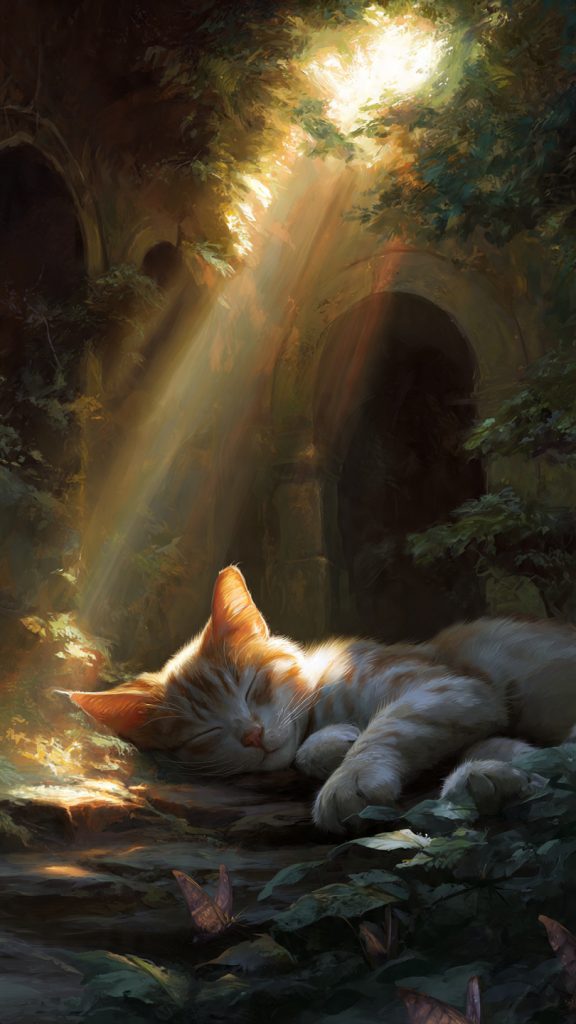
You know that moment when a cat pads into a room and everything else — the news alerts, the “urgent” emails, your inner critic — quietly recalibrates to the cat’s timetable? That’s the first lesson of the cat spirit animal: presence. Not flashy, not performative, simply present. The cat doesn’t hustle for attention; it attracts it by being precisely itself. You, too, can do this. Imagine being so aligned with your own rhythm that others take note without your having to shout.
Cats teach sovereignty. When a cat refuses to be picked up, it’s not being stubborn; it’s protecting its boundaries. You get to say “no” without guilt. You get to step away from things that pry at your edges. Saying “no” is not mean — it’s self-respect. If you’ve spent years apologizing for existing or over-explaining your needs, take a page from the feline handbook: keep your tail high, and let your space be yours.
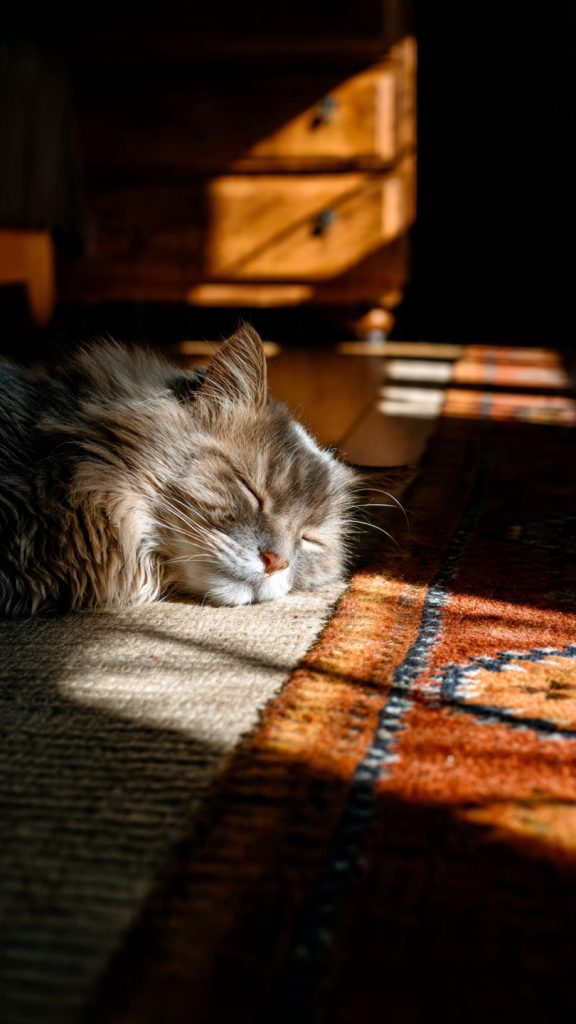
There’s an effortless grace to cats that’s less about yoga and more about prioritizing rest. Cats nap as a strategic practice, not a moral failing. You are allowed to conserve energy. Rest is not the enemy of productivity; it is the secret ingredient. When you stop measuring worth by busyness, you open space for clarity, creativity, and delight. Cat wisdom: naps count as planning.
Cats also model selective attachment. They adore on their terms and show affection in small, unmistakable ways — a head bump, a purr, the deliberate sit-on-your-book move. Love doesn’t have to be loud to be deep. Let this teach you to love with discernment: invest where it nourishes you, and withdraw when it drains you. Loyalty is reciprocal. If you give everything to people who claw at your heart, you’ll have nothing soft left to give.
Humor is a spiritual practice in the cat’s world. Have you watched a cat casually judge a cucumber? There’s a mischievous, absurd intelligence there. Learn to laugh at yourself and at life’s small absurdities. Laughter loosens the tight places in your chest and makes room for the kind of courage that whispers, “Try again.” The cat’s mock outrage at a closed door is a reminder: don’t take appearances too seriously.
Finally — and this is a big one — the cat spirit animal is masterful at mystery. Cats hold parts of themselves in shadow, and that’s permission for you to be a little enigmatic too. You don’t owe explanations for every choice or feeling. Keeping some things sacred preserves their power. You can be known and still be mysterious; you can be kind and still keep a private inner life.
Takeaways (cat-tested):
- Presence > performance. Be here; that’s enough.
- Boundaries = sovereignty. Your “no” matters.
- Rest is strategic. Naps are radical care.
- Love selectively. Loyalty is mutual.
- Laugh at absurdity. Humor heals.
- Preserve mystery. Some parts are for you alone.
So move through your day with the cat’s quiet confidence. When someone demands your time, consider whether you’ll trade your peace for their noise. When your schedule looks like a too-full food bowl, remove one thing. When your heart needs guarding, raise that invisible tail and sit with dignity. Be soft where you choose, fierce where it matters, and unapologetically yourself — which, if you listen closely, is exactly what the cat has been trying to teach you all along.
From Egyptian goddesses to Japanese lucky charms, we'll explore the surprisingly varied (and often contradictory) symbolism of the cat, and what these ancient perspectives are trying to teach you about living your best, most unapologetically independent life.
Egypt: The Original Cat Influencers
You should know, first and foremost, that your cat-ness has ancient pedigree. Long before influencer houses were a thing, Egyptians had it all figured out: the cat sauntered down the aisle between gods and humans and everyone understood the hierarchy. They didn’t just tolerate cats — they elevated them to near-divine status, which means your lazy Sunday nap schedule is basically a spiritual inheritance.
Bastet: You literally have a goddess who protected you and your pantry.
Meet Bastet: part fierce protector, part house-cat diplomat. Once upon a time she was a lioness-warrior type — full mane, claws out, very dramatic — guarding the borders and bringing the thunder. Over centuries she shifted personas the way you change playlists: from battle-ready lioness to the domesticated cat goddess who curls on a windowsill and somehow manages to keep chaos at bay.
Imagine an ancient Egyptian family laying out milk, bread, and the best seat in the shade for a being who could alternately scorch an enemy or bless the household with calm. That’s Bastet. She’s the original brand manager for both protection and pleasure. She protected crops, babies, and pantries — but she was also the patron of music, dance, and good grooming. Translation: divine vigilance with an aesthetic sensibility.
You, when aligned with Bastet, are not merely tolerated. You are a curated presence. You patrol the thresholds of your life — literal and emotional — and you expect elegance while doing so.
The Lesson for You: Guard your inner peace and indulge the senses
If your spirit animal is a cat, consider this your permission slip. Bastet taught two things at once: defend the home, and relish the delights of being alive. That’s not a contradiction. In fact, it’s a secret formula.
- Guard your inner peace: Cats don’t ask permission to be territorial. They stake out space with the quiet confidence of someone who knows their worth. You, like the cat, are called to put up healthy boundaries. Say no without melodrama. Close the door on energy-sucking people. Protect the places where you recharge — your bed, your inbox, your time alone — the same way a cat circles and claims a new box.
- Indulge in sensual pleasure: Cats are connoisseurs of comfort. A sunbeam, a warm towel, the precise angle of a nap — these are not small things. They are the curriculum of a well-lived life. When you let yourself truly savor the tactile, the tasty, the low-key luxurious, you are doing spiritual work. That warm towel is ceremony. That extra five minutes of stretching is ritual. You deserve these small, repeating blessings.
Combine the two and you have a life that’s both inviolate and pleasurable: fierce boundaries, lush experiences. Bastet didn’t choose one over the other. She smoothed her fur and stood guard.
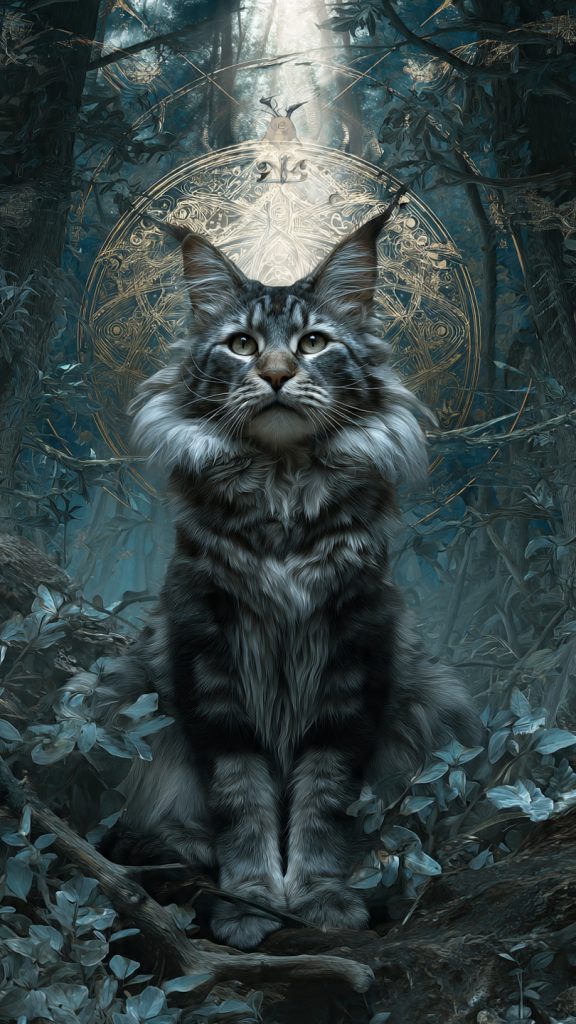
Practical ritual to try (channel your inner cat-goddess):
- Each morning, reclaim a five-minute “sunbeam” ritual: sit with a beverage, face a window, breathe slowly. No screens.
- Make a “towel altar”: treat one small comfort as sacred — a favorite scarf, a towel warmed in the dryer, a mug that fits your hand perfectly. Use it with intention.
- Practice a gentle perimeter sweep: take two minutes daily to tidy or clear one boundary in your life (an inbox folder, a messy corner, a recurring commitment you can decline).
You are not being asked to roar like a lion in traffic. You are being asked to embody the elegant power of a goddess who knows how to protect a pantry and prefer pleasure without apology. That’s your invitation: be both guardian and hedonist. Curl up in safety. Purr loudly enough that the world knows you’re home.
Norse Mythology: Freyja's Chariot
1. The Big Picture: The goddess of love, fertility, and battle rides a chariot pulled by two enormous, fluffy cats. Yes, you read that right.
Picture this: the Norse goddess Freyja—goddess of love, fertility, and yes, battle—gliding across a twilight plain in a chariot pulled by two enormous, fluffy cats. Not mares, not lions, but unapologetically plush cats, whiskers twitching, tails high. It’s absurd and utterly perfect.You, reading this, are allowed to carry that image into your life.
Imagine those cats. They are soft enough to nap on a sunlit windowsill and fierce enough to skewer a marauding troll (or at least swat a hand that gets too close). They purr with devotion and practice warlike precision when needed. Freyja chooses them because she knows power wears many coats—velvet and claw.
2. The Lesson for You: Your cat spirit animal teaches you that true softness and vulnerability (love/fertility) can exist alongside fierce power and independence (battle). You are allowed to be both magnificent and needy.
Your cat spirit animal teaches a paradox you desperately need: softness and vulnerability can coexist with fierce independence and strength. You don’t have to trade tenderness for toughness. Want to love deeply and also set boundaries that would make a Valkyrie proud? Good. You’re allowed to be magnificent and needy. You can purr into someone’s ear and also refuse to share your last slice of pizza.
Practical nudges from the chariot:
- When you feel weak, remember softness is strategy—rest replenishes your claws.
- Practice asking for help as a daily ritual; it’s not begging, it’s inviting others to admire your sheen.
- Claim small territories: a chair, a time block, a sacred snack. Defend them with courteous ferocity.
So when you doubt whether tenderness makes you vulnerable, picture Freya’s cats hauling a goddess across the sky. Let that image be permission: to purr, to roar, to love like a force of nature—and to nap through part of it.
Medieval Europe: The Whiskered Scapegoat
Once upon a midnight-that-smelled-like-must and superstition, people in medieval Europe decided that cats were up to something. Mostly they decided this while clutching rosaries, imagining plagues, and blaming anything mysterious on creatures with fur. Black cats, in particular, became the poster children of suspicion: familiars for witches, conveyors of bad luck, the purring embodiment of “don’t trust what you don’t understand.” You can almost hear the town crier: “Behold—the animal that refuses to bow!”
1. The Symbolism: Cats, especially black ones, were seen as familiar spirits of witches and symbols of bad luck, the Devil, and basically anything that threatened a rigid, puritanical structure.
Cats carried all the anxieties of a culture trying to make the world small and safe. Their independence was indecent, their midnight prowls were evidence of complicity with darker forces, and their refusal to beg permission to be themselves read like high treason against rigid social order. So people made stories: cats were devil-adjacent, witch-accomplices, vessels of mischief. These stories said far more about the storytellers than about the cats. The creatures themselves continued to nap, stalk, and knock things off shelves with perfect apathy.
2. The Lesson for You: Being misunderstood is a superpower.
If the cat is your spirit animal, congratulations: you are licensed to be gloriously unbothered by other people’s silly rulebooks. Being misunderstood? That’s not a flaw. That’s your edge. The parts of you that get labeled “weird” or “dangerous” are the same parts that open doors other people didn't even know existed. Those qualities make you an oracle of sorts—mysterious, practical, and excellent at pest control.
So invite your inner cat to the front of the house. Let it sit on your favorite windowsill and survey life with a look that says, “I will decide whether this is worth my attention.” When others cast your quirks as threats, smile like a cat who has caught three mice and still has eight lives left. Steward your strangeness: feed it, respect its naps, and let it lead you toward the soft, strange places where real magic quietly happens.In short: wear your whiskers proudly. The world that feared cats in a medieval square missed the point—the power of a cat is not in terror, but in sovereign presence. Be that presence. Be the creature who shows up on their own terms, then curls into a perfect, unimpeachable ball of self-possession.
The Aztec and Mayan Cultures: The Night Watchers
You already know how a cat moves: a silent whisper of fur, a pause, and then—if you’re lucky—an elegant leap onto the exact place you needed to notice. That’s not clumsy mysticism; that’s an ancient pedagogy. In Aztec and Mayan lore the big cats—jaguars, pumas—are the Night Watchers, beings that walk the borderlands between the visible day and the deep, fertile dark. If a cat is your spirit animal, it’s as though the Night Watchers sent you a postcard that reads: “Bring a flashlight, or better yet—learn to love the dark.”The symbolism is deliciously simple and fiercely complicated all at once. Jaguars and pumas were linked to night, darkness, and the underworld; not as something to fear, but as a realm full of seeds, of secrets, of the slow work of becoming. Where you see black velvet and stars, the Aztecs and Maya saw a terrain teeming with possibility: unseen realms of consciousness where the rules of daylight—noise, hurry, the applause of certainty—don’t hold court.
The Lesson for You: It’s time to go into the darkness.
You are being asked to trust your intuition in the 'shadow' areas of your life and recognize that the things you fear are just napping deeply in the shadows. The Night Watchers aren’t handing you a map. They’re inviting you to develop night vision.
- Go into the darkness. Literally and metaphorically: sit with feelings you usually switch off, notice the thoughts you tuck under a rug. The cat doesn’t charge in like a hero; it circles, it listens, it becomes more present to what moves in the shadows. You are being asked to do the same.
- Trust your intuition. Cats don’t consult a to-do list. They calibrate their whiskers and their inner knowing. You have a quiet GPS—subtle sensations, odd little nudges—that work better in low light. Practice small experiments: follow the pull to call someone, sing badly, say the thing you’ve been avoiding. See what answers come back from the dark.
- Recognize your feared things are napping. Those anxieties you dread? The jaguar of your mind has a cozy corner and a sunbeam. They look enormous in your daytime mind, but up close they’re often dozing. Approach gently. You don’t need to wrestle them awake to see they’re manageable.
- Move with softness and precision. Cats teach you to conserve energy and choose your moments. You don’t have to sprint through every problem. Sometimes a slow, steady, watchful presence is the most powerful action you can take.
- Honor the underworld as fertile. The Aztec and Mayan underworld was not merely doom; it was compost—dark, rich soil where new forms sprout. When something ends or when a fear pulls you under, remember: decomposition precedes growth. Your shadow work is the alchemy that turns loss into seed.
You might picture yourself as a small house cat padding into a temple with a flick of curiosity and zero drama. That’s perfect. You don’t need to be heroic; you need to be honest and present. The Night Watchers want you to know that darkness contains information, and that most of your “monsters” will purr if you let them. So tonight—if the idea fits—try this: sit somewhere quiet and imagine a jaguar curling at your feet. Breathe. Ask one small question that feels real: Where am I hiding my true yes? What would feel honest right now? Wait. Notice. Your intuition, like a cat, will nudge you when it’s ready. Remember: the Night Watchers don’t rush you out of the dark. They teach you to move through it with curiosity, a little mischief, and the calm certainty that when you return to the light, you’ll bring something beautifully wild and newly awake.
Japan: The Maneki-Neko (The Waving Cat)
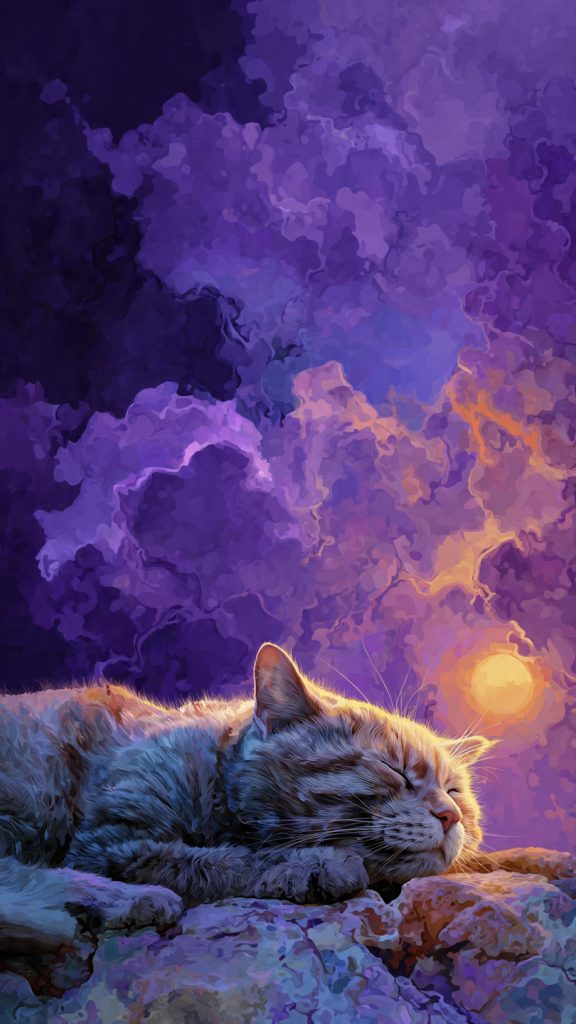
Imagine you wake up and the first thing greeting you is a small ceramic cat with one paw raised, its glazed eyes the size of forgiveness. That’s the Maneki‑Neko, Japan’s forever‑optimistic lobbyist for fortune. You know the one—plump, polite, wearing a red collar and sometimes clinging to a koban (old gold coin) like it remembers a past life as a tiny, upright banker. Businesses keep it on shelves like an ancient, polite PR team: “Come in. Spend money. Be delighted.” It’s smiling at life the way you sometimes try to smile at your email inbox at 9 a.m.
In one popular tale, a poor temple priest had a cat who raised its paw to beckon a passing samurai out of a storm; the samurai followed the cat’s gesture, avoided a lightning strike that hit the very spot he’d been standing, and rewarded the temple thereafter. Another version tells of a shopkeeper’s cat saving her from ruin by signaling customers to enter. These stories aren’t just nostalgia; they’re a ritualized hint: attention redirected by a small, unassuming gesture can shift the flow of fortune.
The Symbolism: Good Fortune, Hospitality, and Tiny Miracles
The Maneki‑Neko is shorthand for a few elegant truths: abundance is a social thing (you invite it in), posture matters (a raised paw is a polite summons), and sometimes luck isn’t a thunderbolt but a well‑timed wave. Businesses put one in windows because the cat says, “We are hospitable; we welcome exchange; we are open to receiving.” Over time that belief becomes practice; the gesture cultivates an atmosphere where small opportunities are noticed and seized. The cat itself is a practice in optimism: the room believes it will prosper because the cat believes it will.
The Lesson for You: Effortless Attraction
Here’s the direct, slightly miraculous homework your cat spirit hands you: you do not have to hunt like a desperate predator to get what you need. You don’t sprint after every lead or beg life for validation. Your inner Maneki‑Neko knows a simpler trick: signal gently, hold space, and let the world respond.
- Wave a paw: A small, consistent gesture of openness—reply to that message, post your work, say yes to a coffee—creates invitation. Not all waves will summon fortune, but some will. That’s enough.
- Look adorable (to yourself): Cultivate self‑acceptance so your vibe says “welcome” instead of “please don’t notice me.” Vulnerability that’s dressed in self‑compassion is highly magnetic.
- Practice polite expectation: Keep a tiny, courteous faith that things you need can arrive without elbowing people out of the way. Expectation without entitlement is a quiet power.
- Receive snacks: Yes, literal snacks—treats, compliments, small wins. Let them be proof that attraction works.
Think of your life as a shopfront. You can either stand on the curb yelling, “Buy from me!” or you can place a charming, slightly ridiculous statue on the sill that whispers, “Come on in; you might find something you didn’t know you needed.” The Maneki‑Neko doesn’t hustle; it invites. That is the point.
So the next time you feel compelled to chase down every opportunity like it’s a last bus, channel the cat. Raise a paw of intention, adopt an expression that says you are content with yourself and open to the world, and then—most deliciously—wait. The universe is weirdly amenable to a polite gesture. Snacks will follow.
China: The Shape-Shifters and Protectors
You step into a room and the cat swivels its head and looks right through you. Not a look of boredom, but a slow, discerning appraisal that feels like both benediction and audit. In Chinese lore, cats sit at the edge of worlds. They’re shape‑shifters and guards, both of the threshold and of secrets. They see what you cannot, and they tolerate you long enough to teach you something useful before sauntering off to nap in a sunbeam.
The symbolism is deliciously ambivalent. Cats are praised as clairvoyant, able to sense spirits and rout malign presences; yet because they prowl in twilight, because they move in silence, some folks eye them with a pinch of suspicion. That is your lesson in miniature: part holiness, part mischief, all embodied in a creature that refuses to explain itself.
What this means for you — the part that earns you permission to be both bold and a little sly — is clarity of sight. You have, whether by lineage or practice or sheer good taste, the capacity to see through glittering illusions. People and situations throw up smoke and mirrors, but something inside you tilts its head the way that cat does and says, “Huh.” That hunch? It’s not petty paranoia. It’s a compass.
Trust it. Let it guide who you let into your inner sunbeam and who you politely—firmly—show the door. You don’t have to be mean about it; cats rarely are. They simply disengage. They redirect their affection toward the human who brings the better treats or the warm lap. You can do the same. Redirect your energy to what nourishes you and walk away from the things that rattle your whiskers.
Also, practice the cat’s gentle, hilarious sovereignty. You are allowed to be sovereign in small ways: to refuse invitations that dim you, to protect your quiet, to honor the places where you regenerate. You are allowed to nap, to ignore tiny dramas, to purr when life is soft and arch an eyebrow when it isn’t. Shape‑shift when needed—soften into tenderness, harden into boundary—without asking strangers for permission.
In short: cultivate that feline clairvoyance. Let it sharpen into a simple rulebook for daily living: if it brightens your beam, keep it close; if it sparks and fizzles without warmth, let it go. You’ll sleep better, think clearer, and maybe, just maybe, learn to land on your feet — metaphorically, and, on slippery days, literally too.
Conclusion: What Your Cat Spirit Animal is Meowing to You
Stop running on the hamster wheel! Find the warmest spot in the house, lick yourself clean of old guilt, and stare intensely (or hiss!) at anyone who tries to interrupt your bliss.
Example: For one week, before you agree to any commitment, take three deep breaths and ask, "Would a cat do this?" (The answer is almost always "No.")
Embrace the feline truth: You are inherently worthy of comfort and your independence is sacred. Now go find a sunbeam, beautiful creature.
Possibly Related Articles
About The Author:
(Read more posts by AJ Star)
Posted in: Animals,Spirituality by AJ Star on December 9, 2025 @ 1:06 am